Features
Part of Merchant Cash Advances: How the Contract Works
One cafe, three merchant cash advances decisions, compared side by side
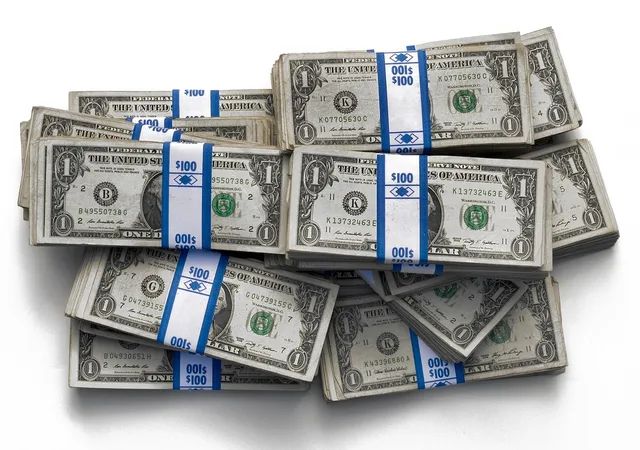
Three merchant cash advance paths for one cafe: a dated fit-out, a winter shortfall, and a second advance that stacks two holdbacks on one stream of card sales.
A cafe with a card terminal and a thin winter gets offered merchant cash advance money three times. The products differ; the shape does not. Each advances cash now and collects a fixed share of card sales until it is repaid.
The three merchant cash advances decisions below compare what that money does when it buys capacity, plugs a gap, or stacks a second advance on the first.
What to take away
- The mechanics barely differ across Square Loans, Rapid Finance and Fora Financial. What the money buys, and what the daily percentage does to cash afterward, is what changes.
Two questions, asked before the broker's second call.
- What will this money buy, and will that thing produce the sales the holdback is taken from?
- Model the holdback against the worst month in the last two years, not the average. If the business cannot operate on what is left, you are on the second or third branch, and a cheaper product priced properly is the better use of the week.
The three advances a cafe with a card terminal is shown
Square Loans advances money against Square card processing. One fixed fee, no compounding interest, repaid as a percentage of daily card sales. Offers are sized on processing volume, and a cafe that runs most of its cards through Square can see one within days.
Rapid Finance writes merchant cash advances and business lines of credit, funded through its own balance sheet rather than a broker network. It suits a business with card volume that wants a decision in days. Pricing is a factor rate quoted at application, not a published APR; typical rates across the market run 1.15 to 1.45.
Fora Financial funds advances and short-term loans from about $5,000 to $500,000, and offers renewals to existing customers. Typical requirements are a year in business and about $10,000 a month in revenue.
It suits a business already funded once that wants a second draw without a fresh underwriting cycle. Pricing is a factor rate, disclosed with the contract.
None of the three publishes a rate card that survives a rate change. Ask for the factor rate and the holdback percentage in writing, then run the arithmetic yourself.
The setup
The cafe trades well from spring to autumn and thinly through winter. In late autumn the owner is short: rent, wages and a supplier are due, and the season's takings will not cover them until spring. Three offers arrive within a week, each collecting a fixed percentage of card sales until the money is repaid.
To keep the comparison even, the terms are identical. Each offer funds $20,000, costs 30 percent of that sum, and collects a 15 percent holdback on card sales. Typical factor rates run 1.15 to 1.45 and holdbacks 10 to 20 percent, so the example sits mid-range.
Those figures belong to the comparison, not to a funder's rate card, and the owner's reason for taking the money differs in each branch.
The arithmetic on the $26,000 obligation is plain. A $20,000 advance at a 1.30 factor rate repays $26,000. The $6,000 cost is 30 percent of the advance. If the holdback clears the balance in six months, the simple annual cost is 60 percent. The effective APR is higher because the balance falls with each collection.
Branch one: a dated fit-out on a Square Loan
A neighboring unit has come up, and taking it would double the seating before spring. The landlord wants a decision now. The owner takes a Square Loan to fit out the second unit, with the works finished before the season starts.
The holdback bites through winter, when card sales are thin. Fifteen percent of a small month leaves each day, but the obligation is fixed at $26,000.
Spring fills the second room and lifts card sales from roughly $30,000 a month to $50,000. The rate stays at 15 percent, so more dollars clear the balance each week, and it clears ahead of projection.
The owner paid a 30 percent cost for speed and certainty about the unit. Priced against what the second unit produced, the decision holds. A cheaper product might have done the same job, and the owner did not price one. That is the honest criticism.
Branch two: the winter shortfall on a Rapid Finance advance
There is no second unit. The owner takes a factor-rate advance from Rapid Finance to cover rent, wages and the supplier.
The money goes out in the first month against bills already due. Nothing new produces revenue.
Then the holdback starts, in the thinnest months of the year, taking 15 percent of every card transaction from a business already short. On $30,000 of monthly card sales that is $4,500 gone before the rent. Daily cash runs lower than before the advance by exactly the holdback.
Spring arrives, sales recover, and the $26,000 obligation clears. The cafe enters the new season having spent the advance and its $6,000 cost on a winter that is over. Nothing was bought that will earn.
The next winter looks the same, except the owner now knows the advance is available. That knowledge is its own kind of problem.
The product did what it said. The business is poorer by the cost, with the structural gap untouched.
Branch three: a second advance from Fora Financial, stacked
Same as branch two, but the winter is worse than expected. With the holdback taking its share of every sale, daily cash falls below what the business needs. Another broker calls, and this time Fora Financial offers a second advance to an existing customer.
The second advance funds within days, and for a few weeks the pressure eases. Then the second holdback starts, on top of the first.
About 30 percent of every card sale now goes out before the business sees it. Two fixed obligations come out of one thin stream. Daily cash sits lower than under one advance, which was lower than under none.
There is also a clause the owner did not read. The first contract treated taking further financing as an event of default. The second advance, taken to relieve the first, was a breach of it. Whether the first funder acts is its choice, and the owner has handed it one.
From here the paths are unpleasant: a third advance, a consolidation offer that recovers none of the cost already sunk, or a talk with an accountant or nonprofit business counselor. That talk belongs before the second advance, not after.
Such counseling is funded through the SBA's partner network and costs the business nothing. The offices are listed under local assistance, and the call is worth making on the day the second advance is first mentioned.
Each round has been sold as relief, and each has reduced the cash the business runs on. That is the spiral, built from a series of individually understandable decisions.
What separated the branches
Product and what the money bought
- One
- Square Loan; capacity that produced new revenue
- Two
- Rapid Finance advance; bills already due
- Three
- Fora Financial advance stacked on the first
What the holdback met in spring
- One
- Sales the advance created
- Two
- The same sales as before, less the cost
- Three
- Two holdbacks on one stream
Outcome
- One
- Expensive, defensible
- Two
- Poorer, gap unchanged
- Three
- Spiral
The cost structure was nearly the same in every branch. The clauses that would have mattered, reconciliation provisions and default triggers, lived in the contracts, and only branch three tested them.
What they say and how to convert the offer into a comparable figure is in merchant cash advances. The guide walks through the factor rate, the holdback percentage and the expected term.
It shows how a $20,000 advance at a 1.30 factor rate becomes a $26,000 repayment. It also explains why the effective APR is higher than the simple annual cost, because the balance falls with each collection. Cost math is in the merchant cash advances calculator.
Before any branch
Before the broker's second call
Will this money buy something that produces the sales the holdback is taken from?
the holdback is met by new revenue
the holdback takes from existing, thinner cash
The two questions above are the test. They ask what the money buys and whether the worst month can carry the holdback. A business that cannot answer both should not take another advance. The right move is to fix the gap or find cheaper money, not to stack a second collection on the first.
A line of credit, where the business can obtain one, is built for the shape of a seasonal gap. Whether the cafe could obtain one is a question about its file rather than its product, and that is the subject of loans by credit profile.
Where to check anything specific
Terms belong to the contract. If you need general guidance on registration, licenses or local rules, the SBA business guide is the starting point.
Common questions
Is the cafe real?
No. It is one illustrative business followed down three paths so the money's job stays the variable. Square, PayPal, Rapid Finance, Fora Financial and American Express are real companies; the cafe is not.
Was branch one a good decision?
It was defensible, priced against what the second unit produced. A cheaper product might have done the same job at lower cost, and the owner should have priced one. Speed has a value, and in this branch it was quantifiable.
What made branch two go wrong?
Nothing in the contract. The money funded a gap that was already there and bought nothing that would earn. The gap survived, larger by the $6,000 cost of the money.
At what point in branch three should the owner have stopped?
Before the second advance. The moment a further advance is considered to relieve the first is the signal, and the right response is outside advice rather than another application.